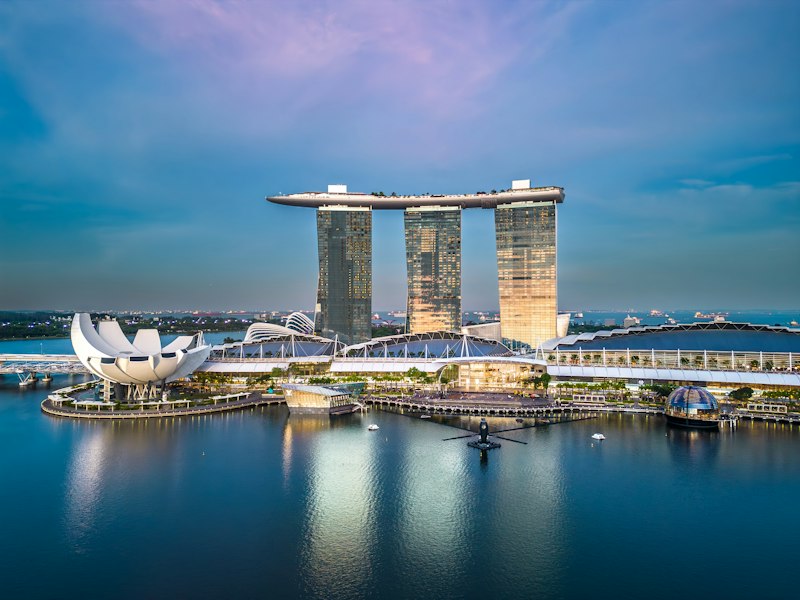
Singapore has been hosting a Grand Prix since 2008. Malaysian businesses have roughly eight weeks to prepare for one.
That gap sounds like a disadvantage. It is actually an opportunity, because Singapore has already run the experiment. Nearly two decades of hotels, restaurants, retailers, and small operators working out what converts during a race weekend and what quietly wastes money. Malaysian brands preparing for the Sepang weekend on 2 to 4 October 2026 do not need to guess. They need to borrow.
Here is what the Singapore experience consistently shows, and how it applies on this side of the Causeway.
Singapore stopped treating it as a race and started treating it as a season
The most important shift across the Causeway was conceptual. In the early years, businesses planned for a race day. Now they plan for a period that starts well before the cars arrive and continues after they leave.
Visitors book flights and hotels months ahead, research restaurants weeks ahead, and arrive days early. The commercial activity is spread across roughly a fortnight, not concentrated in seventy two hours.
For Malaysian businesses, the practical implication is that your campaign window is longer than the race weekend, in both directions. Late September traffic and the days after 4 October are part of the same opportunity.
Lesson one: most of the spending happens away from the circuit
The circuit captures ticket revenue. Almost everything else, the meals, the drinks, the shopping, the transport, the extra nights, happens elsewhere in the city.
This is why the businesses that benefit most are usually not the ones nearest the track. They are the ones positioned where visitors actually spend their non racing hours. In Malaysia that means Kuala Lumpur city centre, Bangsar, Mont Kiara, and the KLIA corridor have as much to gain as anywhere near Sepang itself.
If you assumed this event was only relevant to businesses beside the circuit, reconsider.
Lesson two: the winners book early and communicate earlier
A pattern repeats every year in Singapore. Restaurants that open race weekend reservations early fill them. Restaurants that wait until the week before find that visitors already have plans.
Race weekend visitors are planners by necessity. They are travelling, spending significantly, and working around a fixed schedule of sessions. They lock in their arrangements well in advance and they are not browsing for last minute options.
The lesson for Malaysian businesses is uncomfortable but simple. If you are not visible and bookable in August and early September, you are competing for scraps by October. This is the reasoning behind the timeline in our eight week race weekend plan.
Lesson three: hospitality beats discounting
Race weekend visitors are not price sensitive in the way a normal weekend crowd is. They have already spent heavily on flights, tickets, and accommodation. A ten percent discount does not move them.
What does move them is being looked after. Reserved seating so they are not standing. A staff member who knows what time the session starts. A viewing screen. Transport arranged. Anything that reduces friction in an unfamiliar city.
Singapore businesses learned to compete on experience rather than price, and they protected their margins doing it. Malaysian businesses instinctively reach for a promotion. This is the weekend to reach for hospitality instead.
Lesson four: the content that travels is made by guests, not brands
Search Singapore race weekend content and most of what surfaces was created by visitors, not by the venues they visited. Posts, videos, and reviews from people documenting their own trip.
That content reaches far more people than any brand campaign, and it costs nothing except designing an experience worth recording. We covered this dynamic in why your customer's phone is your best marketing channel, and race weekend is the clearest example of it in a single concentrated period.
Build one moment worth photographing. Make it easy to tag you. Then respond to everything that gets posted.
Lesson five: the weekend is a foot in the door, not the whole sale
The businesses that treat race weekend as a one off transaction get one weekend of revenue. The ones that treat it as customer acquisition get considerably more.
Regional visitors from Singapore, Indonesia, and Thailand return. Business travellers come back. Reviews written after a good race weekend keep working for years. The best operators in Singapore capture contact details, encourage a follow, and ask for the review while the experience is still fresh.
Malaysia has a particular advantage here. Many of the visitors arriving in October will be from within the region and can realistically return within months.
Where Malaysia is genuinely different
Borrowing the playbook only works if you account for the differences, and there are three that matter.
This is a stand in event rather than an established fixture. The race carries the Bahrain Grand Prix name and Malaysia is hosting on Bahrain's behalf, so there is no guarantee of a repeat. That argues for capturing value now rather than treating this as year one of a long build.
Sepang is outside the city rather than through the middle of it. Singapore's street circuit puts the race in the centre of everything. Sepang does not, which makes transport, viewing venues, and city centre hospitality more important than proximity.
And competition is far lower. Singapore businesses fight for attention against eighteen years of established race weekend marketing. In Malaysia, most businesses have not even realised the opportunity exists yet. That is a temporary advantage and it belongs to whoever moves first.
The bigger picture
Singapore's real lesson is not any single tactic. It is that a Grand Prix rewards businesses that prepare like professionals and quietly passes over the ones that improvise.
Malaysia has less time but a clearer field. The playbook already exists, it has been tested for the better part of two decades a few hours south, and it is available to anyone willing to start now.
If you want the wider context on what this event means for Malaysian brands, start with our breakdown of the Sepang return.
Want help applying this to your business? ADspace works across both the Malaysian and Singaporean markets and builds campaigns designed for exactly this kind of moment. Talk to our team.
Photo by Sanjeevan SatheesKumar on Unsplash